How to Use Automation to Knock A Star Off Your Review
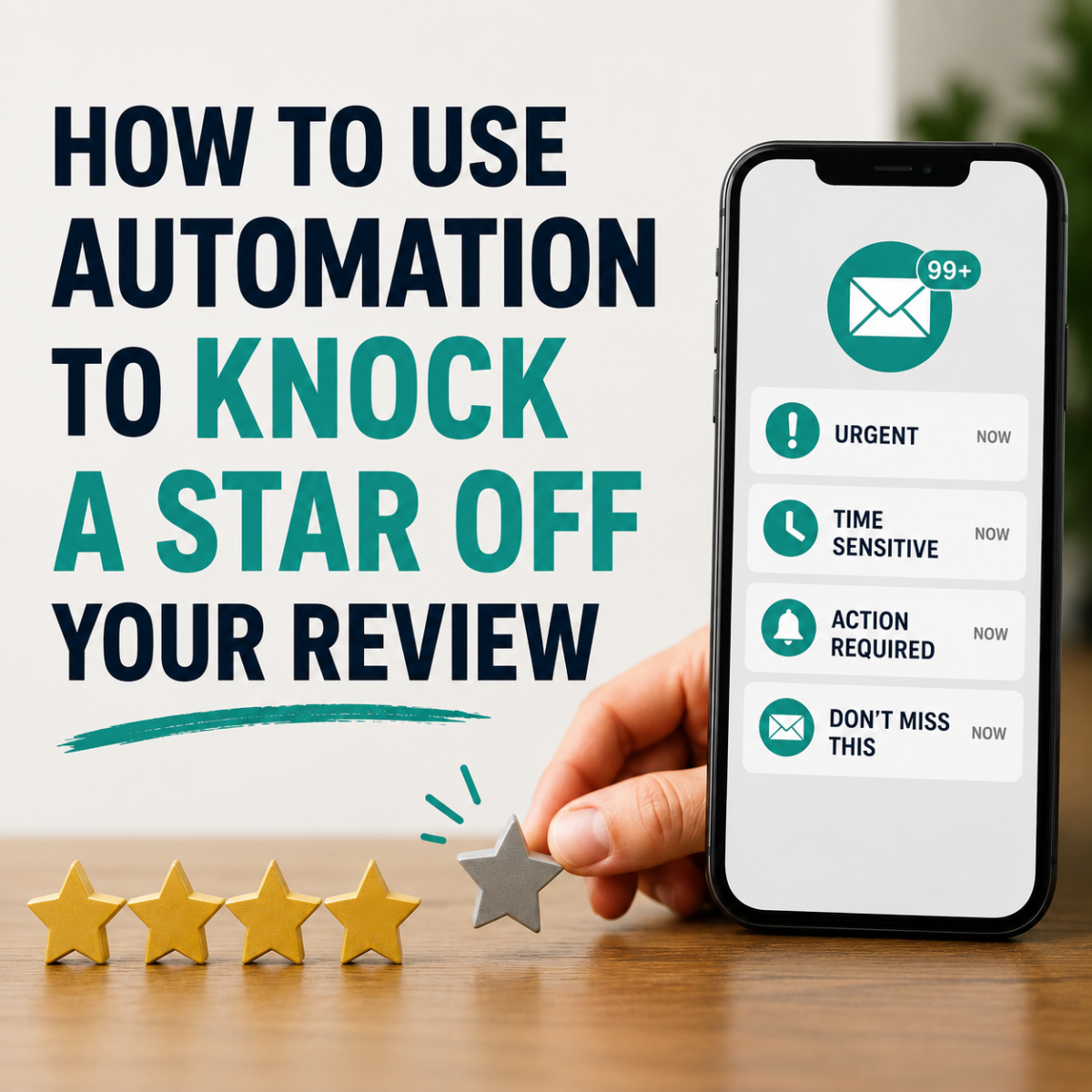
Automated marketing and customer communication systems have done a ton for our industry. From speeding up response times to drastically decreasing the communication workload, these systems can increase profits and make life as a small business owner significantly easier.
However, it’s important to note that these systems take extensive thought about your customer experience; effort in replicating it; and consistent testing, learning, and course correcting to maintain a 5‑star customer experience.
In our last blog, David discussed his customer experience when an automation campaign started strong but eventually fell flat and caused him to seek out a different company for services. This month, I experienced a similar failure: A business successfully using technology and a human touch to build trust and then losing that trust when they become overly reliant on automation.
Since the marriage of automation and human touch is such a nuanced topic, I thought this was an excellent opportunity to dive in and discuss what went right, what went wrong, and the lessons I learned from being the customer.
Trust Earned
Recently, we decided to ship one of our vehicles when moving across the country. I used a trusted article source to identify some of the top providers. I visited each website, read reviews, and got online quotes to narrow it down. Surprisingly, the factor that pushed most companies out of my search was online forms that didn’t work. Lesson #1: Make sure your online forms work.
Since I was new to the process, I decided to make a few calls to the finalists to learn more. The first person I spoke to was delightful. She was knowledgeable, walked me through the entire process, and was patient with all my questions. She was such a pro that I decided to go with them immediately. She assigned me a sales rep, sent me the needed forms, and we were off to the races. Lesson #2: Well-trained, talented human salespeople can accomplish a lot in a single phone call.
Trust Tested
Before I had a chance to complete the paperwork, packing the moving truck became the focus of my schedule. Since I was leaving the car with a friend until it could be picked up, it wasn’t a problem for me to put it on the back burner for 24 hours. Clearly, they did not agree. That first day, I got completely bombarded by robo-emails and calls. “Hurry,” “urgent,” and “notice of cancellation.”
I don’t know if the messages signaled fake, automated urgency, or if the timing was just bad, but I ignored all of the touch points and became increasingly irritated by the company.
Finally, despite having received multiple automated texts and emails, I had already emailed the rep they assigned me with some additional questions and received no response.
Lesson #3: As you automate more and more communication, it’s worth really looking into how it affects the customer experience. Something you build to increase communication efficiency and trust can inadvertently erode it.
It turns out those emails and calls were actually urgent because they had found a carrier for my car. All those calls and emails were designed to ensure speedy communication between me and the driver. So why did they actually entice me to stop communicating? I spent a fair amount of time pondering this question.
First, the emails were overly designed and used a ton of hyperbolic language. It signaled to me “manufactured urgency.”
Second, a flood of automated content combined with a complete failure of human response to one of my questions obviously didn’t sit well with me. I couldn’t help but ask myself, is this a company I can really trust?
Trust Regained — But Not 100%
Once I got my feet under me, I called them. Once again, I spoke to a brilliant human who explained everything and told me they wanted me to be completely comfortable with this experience moving forward.
I’m giving them another chance, so it wasn’t a total loss. But assuming this goes well, I will still knock off a star in my review. This is not meant as a punishment. It’s meant to alert other customers about how this process works from a customer’s perspective. In my opinion, there are flaws in the communication process I wish I would have been aware of.
So as you create or review your marketing and customer service automation, take some time to consider the blind spots that erode trust or banish it completely, and don’t forget — humans are still essential.
Need help?
Feeling overwhelmed? At DC Marketing Group, we specialize in marketing for painters. Our vast experience and insights can streamline your marketing processes and get your automations up to snuff. Schedule Your Free Consultation Call today!

About Emily Howard
Emily has always been passionate about the trades and joins us after 15 years as editor-in-chief at American Painting Contractor. Last year, she traded her full-time desk job to explore a career in farming. Today, she balances her two passions by farming fresh veggies at a small farm in the summer and creating content and marketing strategies for the painting industry in the winter. Emily is dedicated to clean data, smooth systems, and telling the stories of the painting industry.
When she isn’t working at a desk or in a field, she enjoys Colorado life with her two dogs and fiancé: hiking, snowboarding, tending her plants, and making pottery.